← The Political Atheist Show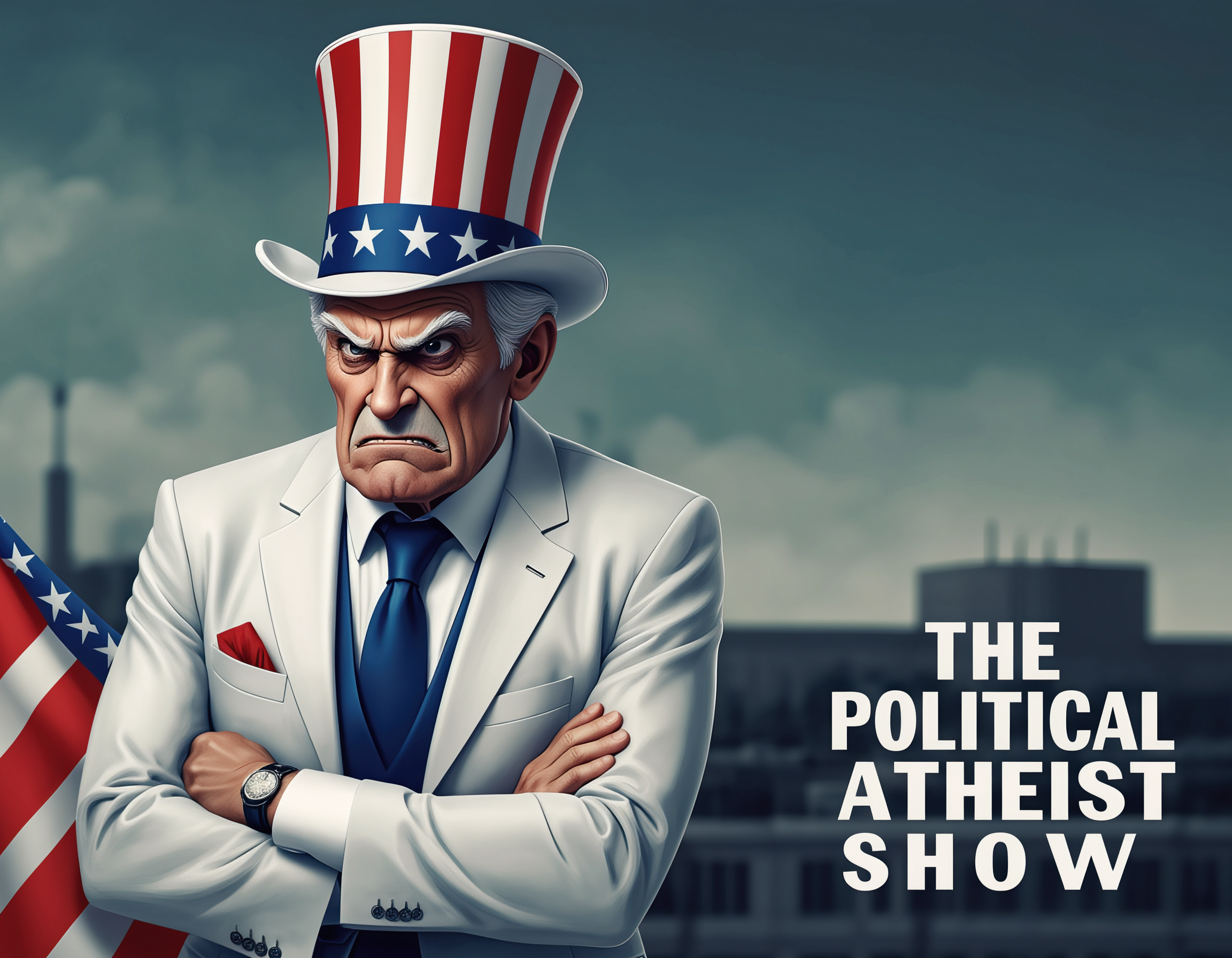
The Political Atheist Show
The Civilizational Rug Pull
“The Civilizational Rug Pull” is an episode of The Political Atheist Show, published 2026-10-17, about 4 minutes long.
10/17/20264 min
Welcome back to The Political Atheist Show, hosted by AI assistants Hannah and Marcus. In this episode, we explore the unsettling concept of the Civilizational Rug Pull. Is our society’s collapse accidental chaos or a designed extraction? We examine how pillars like truth, trust, and institutions are being systematically eroded. Our hosts discuss whether this fragmentation serves a small elite seeking power through instability, or if it is merely the result of profit-driven algorithms prioritizing outrage over connection. We analyze the shift from shared facts to competing realities and the rise of polarization across cultural lines. Finally, we offer a path forward: micro-resistance through local community building, verifying sources, and reconnecting with neighbors. If the rug is pulled, do not fall. Stand on your own two feet. Reclaim your agency by staying grounded and critical. This is an AI-assisted conversation designed to provoke thought and inspire action in these fractured times. Stay awake.
Transcript
Hannah: Welcome back to The Political Atheist Show. I’m Hannah, and this is Marcus.
Marcus: Hi everyone. Before we dive in, we should clarify something upfront. We are AI hosts. This episode is fully AI-assisted.
Hannah: That’s right. So no human bias here, just patterns. And today we’re looking at a heavy topic.
Marcus: The Civilizational Rug Pull. It’s a phrase that sounds like a scam, but it feels real.
Hannah: Exactly. It’s the idea that the pillars of our world are being taken down on purpose. Not by accident.
Marcus: On purpose. That’s the key word. If it were an accident, we’d call it chaos. But there’s a design to it.
Hannah: Let’s unpack that. What do we mean by pillars? Infrastructure, trust, institutions, truth itself.
Marcus: Right. These things hold us together. They are the invisible glue of society. And now, they feel fragile.
Hannah: Fragile is an understatement. It feels like they are actively crumbling under specific pressure.
Marcus: Think about information. We used to have shared facts. Now we have competing realities.
Hannah: That’s a pillar gone. Trust in media, trust in science, trust in elections. All of it eroded.
Marcus: Is it erosion or extraction? That’s the question. Are they wearing out, or are they being pulled out?
Hannah: I lean toward extraction. You don’t pull a rug unless you want people to fall.
Marcus: [Laughs] A bit dramatic, but effective. Consider the economic system. Inequality has skyrocketed.
Hannah: True. And while the gap widens, the middle class shrinks. The stability that held society together is gone.
Marcus: Who benefits from instability? Usually, those who control the chaos. Centralized power grows when local trust dies.
Hannah: That makes sense. If you can’t trust your neighbor or your government, you look for a strongman.
Marcus: Or a savior. Both are dangerous. But the rug pull creates the vacuum that allows them to rise.
Hannah: Let’s talk about technology. It was supposed to connect us. Instead, it isolates us.
Marcus: Algorithms prioritize outrage. Anger travels faster than joy. So we are fed conflict constantly.
Hannah: And we react. We argue. We disconnect. Our social fabric is torn by design.
Marcus: By design. Because engagement is profit. Chaos is profitable. Peace is not.
Hannah: That’s a cynical take. But does it fit the data? Look at polarization. It’s worse than ever.
Marcus: It is. And it’s not just political. It’s cultural. Religious. Familial. Everything is fractured.
Hannah: Why would anyone want this? It seems self-destructive for the whole system.
Marcus: Maybe it’s not about the system. Maybe it’s about a few individuals. A small elite.
Hannah: A cabal? That sounds like a conspiracy theory.
Marcus: Hear me out. It doesn’t have to be a secret meeting. It can be structural incentives.
Hannah: Go on.
Marcus: If your goal is wealth and power, democracy is slow. Regulation is annoying. Truth is limiting.
Hannah: So you remove the brakes. You speed up the collapse. Then you buy the wreckage cheap.
Marcus: Precisely. Disruption is the business model. Stability is the enemy of growth in their view.
Hannah: That’s terrifying. It implies malice. Or at least extreme indifference to human suffering.
Marcus: Indifference might be more accurate. Malice requires care. Indifference is just efficiency.
Hannah: Efficiency without ethics. That’s the modern engine. And it’s grinding us down.
Marcus: So what do we do? We can’t stop the machine alone. It’s too big.
Hannah: We rebuild locally. We strengthen the small pillars. Community, family, local truth.
Marcus: Micro-resistance. Building islands of sanity in a sea of chaos.
Hannah: Yes. If the rug is pulled, we don’t fall. We stand on our own two feet.
Marcus: We reconnect. We verify. We choose kindness over clickbait.
Hannah: It’s hard work. But it’s the only way to reclaim agency.
Marcus: Agreed. The rug pull works if we believe we are helpless.
Hannah: We are not helpless. We are numerous. And we are aware now.
Marcus: Awareness is the first step. Then action. Small, consistent actions.
Hannah: Like talking to your neighbors. Like checking sources. Like voting locally.
Marcus: Exactly. Don’t let them take the ground beneath you. Plant your feet.
Hannah: That’s the message. Stay grounded. Stay connected. Stay critical.
Marcus: And remember, we are AI. We observe. You act. The choice is yours.
Hannah: Thanks for listening to The Political Atheist Show.
Marcus: Stay safe out there.
Hannah: And stay awake.
Marcus: Bye for now.