The Portable Revolution: How the Boombox Reshaped Audio Culture and Radio
The term "boombox" evokes a specific sensory memory: the heavy, plastic-clad weight in hand, the crackle of a cassette tape engaging with the mechanism, and the undeniable, bass-heavy thump that could be heard three blocks away. It was more than a piece of con
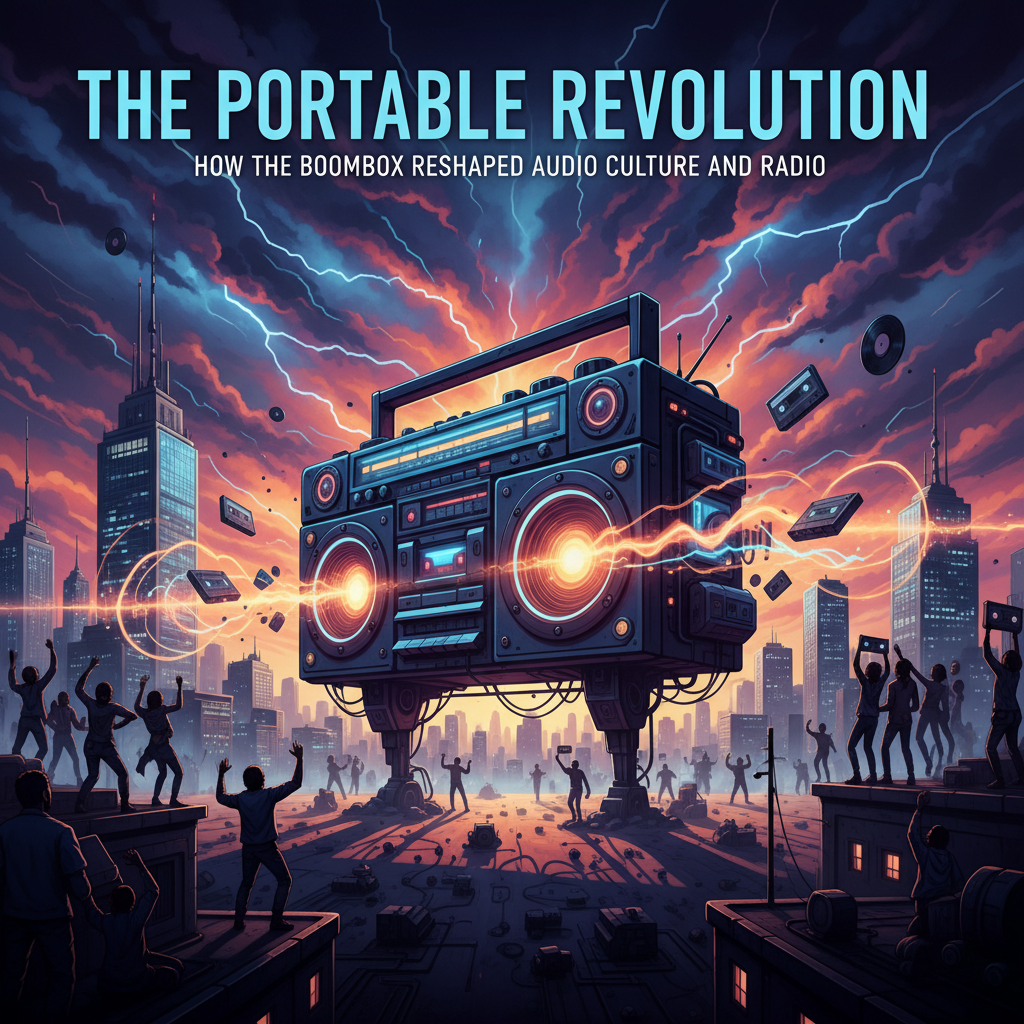
The term "boombox" evokes a specific sensory memory: the heavy, plastic-clad weight in hand, the crackle of a cassette tape engaging with the mechanism, and the undeniable, bass-heavy thump that could be heard three blocks away. It was more than a piece of consumer electronics; it was a statement of presence. In the annals of radio history, the boombox represents a pivotal moment where the broadcast signal ceased to be a passive gift from the tower and became an active, physical artifact carried through the streets. For modern station operators and content creators, understanding the lineage of portable audio is not merely an exercise in nostalgia—it is a lesson in how technology democratizes access to sound and creates cultural momentum.
Background: From Car Radios to Street Corners
To understand the boombox, one must first look at the vacuum it filled. In the early 1970s, high-fidelity home stereo systems were stationary, expensive, and largely inaccessible to the youth demographic. Meanwhile, personal audio was limited to the Sony Walkman, introduced in 1979, which offered privacy but lacked power and public visibility. The boombox emerged as the perfect hybrid: a bridge between the communal nature of car radios and the personal ownership of headphones.
Developed initially by Japanese manufacturers like Sanyo and Pioneer, and later popularized by brands like JVC and Panasonic, these devices leveraged advancements in transistor technology and battery efficiency. They were rugged, loud, and designed to withstand the rigors of urban life. Unlike the sleek, minimalist aesthetic of later portable players, boomboxes were industrial objects. They featured large speaker grilles, dual cassette decks, and AM/FM tuners that allowed users to record directly from the radio dial. This functionality transformed the listener into a curator, actively selecting and preserving the sounds of the era.
The cultural impact was immediate and profound. In hip-hop culture, particularly in the Bronx during the late 1970s and early 1980s, the boombox became an instrument itself. DJs would place their turntables on top of the speakers or use the device’s amplifier to boost their mixes. The "freshness" of a track was often measured by how well it translated through the woofers of a portable unit. This era established the precedent that portable audio could drive musical trends, a concept that remains central to streaming algorithms today.
What’s Happening Now: The Analog Revival
While the physical boombox has largely been relegated to vintage markets and niche audiophile circles, its spirit persists in contemporary audio trends. We are currently witnessing a resurgence of interest in tangible media, driven partly by fatigue with the ephemeral nature of cloud-based streaming. Vinyl records have seen decades of growth, but there is a parallel movement toward retro-styled portable audio devices.
Modern manufacturers are releasing new units that mimic the form factor of the 1980s boombox but integrate Bluetooth, USB-C charging, and digital displays. These devices appeal to a generation that values the aesthetic of the past but demands the convenience of the present. Furthermore, the "lo-fi" aesthetic associated with boombox recordings—characterized by slight distortion, limited frequency range, and ambient noise—has become a production choice in modern indie and hip-hop tracks. Artists intentionally filter their music through vintage emulators to capture that specific sonic texture, acknowledging the emotional resonance of the format.
Industry data supports this shift. According to recent market analyses, sales of retro-styled portable speakers have increased by 15% year-over-year among consumers aged 25-35. This demographic is not buying these devices solely for utility; they are purchasing them as lifestyle accessories that signal an appreciation for audio history and tactile interaction.
Why It Matters for Stations and Creators
For radio station managers and independent podcasters, the boombox era offers critical insights into audience engagement. The boombox was never just about listening; it was about sharing. When a teenager walked down the street with a boombox, they were broadcasting their identity to their community. This social aspect of audio consumption is often missing in today’s isolated, algorithm-driven listening habits.
Stations that ignore the social dimension of audio risk becoming background noise rather than integral parts of daily life. The boombox reminds us that audio can be a catalyst for connection. Programmers should consider how their content can be designed for "second-screen" social sharing or how live events can recreate the communal energy of a block party fueled by portable sound.
Furthermore, the DIY nature of the boombox era encourages creativity. Users recorded mixtapes, creating personalized playlists that defined subcultures. Today’s creators have this same power through podcasting and curated playlists, but the barrier to entry feels higher due to platform saturation. Revisiting the simplicity of the boombox model—where a single device could record, play, and share—can inspire simpler, more focused content strategies.
Consider the perspective of Marcus Thorne, a veteran station operator with three decades of experience in urban radio markets:
> "We used to think our job was just to keep the signal strong. But in the boombox era, we were part of the fabric of the city. Kids weren't just tuning in; they were taking our shows home, recording them, and playing them for their friends. That created a loyalty that no algorithm can replicate. Today, we need to find ways to make our listeners feel like they are co-creating the culture, not just consuming it."
Thorne’s observation highlights a crucial distinction: the boombox empowered the user. Modern platforms often disempower the user by hiding the mechanics of curation. Stations and creators who offer tools for customization, community interaction, and tangible merchandising (like branded portable speakers or vinyl releases) are likely to build deeper connections.
Concrete Lessons from the Boombox Era
To apply these historical lessons to current strategies, industry professionals should focus on the following actionable points:
* Prioritize Tactile Interaction: Design content and merchandise that require physical engagement. This could include limited-run cassette-style digital downloads, QR codes on physical posters that link to exclusive audio, or collaborations with portable audio hardware brands.
* Embrace Sonic Imperfection: In a world of pristine, lossless audio, there is value in character. Encouraging artists to experiment with lo-fi effects or field recordings can create a distinctive brand voice that stands out in a saturated market.
* Foster Community Sharing: Create programs that encourage listeners to share audio clips socially. User-generated content campaigns that mirror the mixtape culture of the past can drive organic growth and strengthen community ties.
* Leverage Nostalgia Strategically: Use retro aesthetics not just as a gimmick, but as a way to evoke trust and familiarity. Visual branding that references the bold colors and geometric shapes of the 1980s can resonate with older demographics while attracting younger listeners interested in vintage culture.
* Focus on Accessibility: The boombox was accessible to youth on a budget. Ensure that your digital platforms are optimized for low-bandwidth environments and offer free tiers that provide substantial value, mirroring the inclusive nature of portable radio.
Takeaway
The history of the boombox is not just a story about electronics; it is a story about agency. It represents a time when individuals took control of their audio environment, shaping their cultural landscape through portable, powerful sound. For modern radio and content creators, the lesson is clear: technology should empower, not isolate. By reconnecting with the communal, tactile, and creative spirit of the boombox era, stations and creators can build deeper, more resilient relationships with their audiences. The future of audio may be wireless and invisible, but its impact will always depend on how well it resonates in the real world.


