The Fading Spotlight: Is the Era of the Hollywood Superstar Over?
For decades, the architecture of popular music was built on a single, towering pillar: the Hollywood superstar. From Elvis to Madonna, from Britney Spears to Justin Bieber, the industry relied on a monolithic model where a handful of global icons dominated air
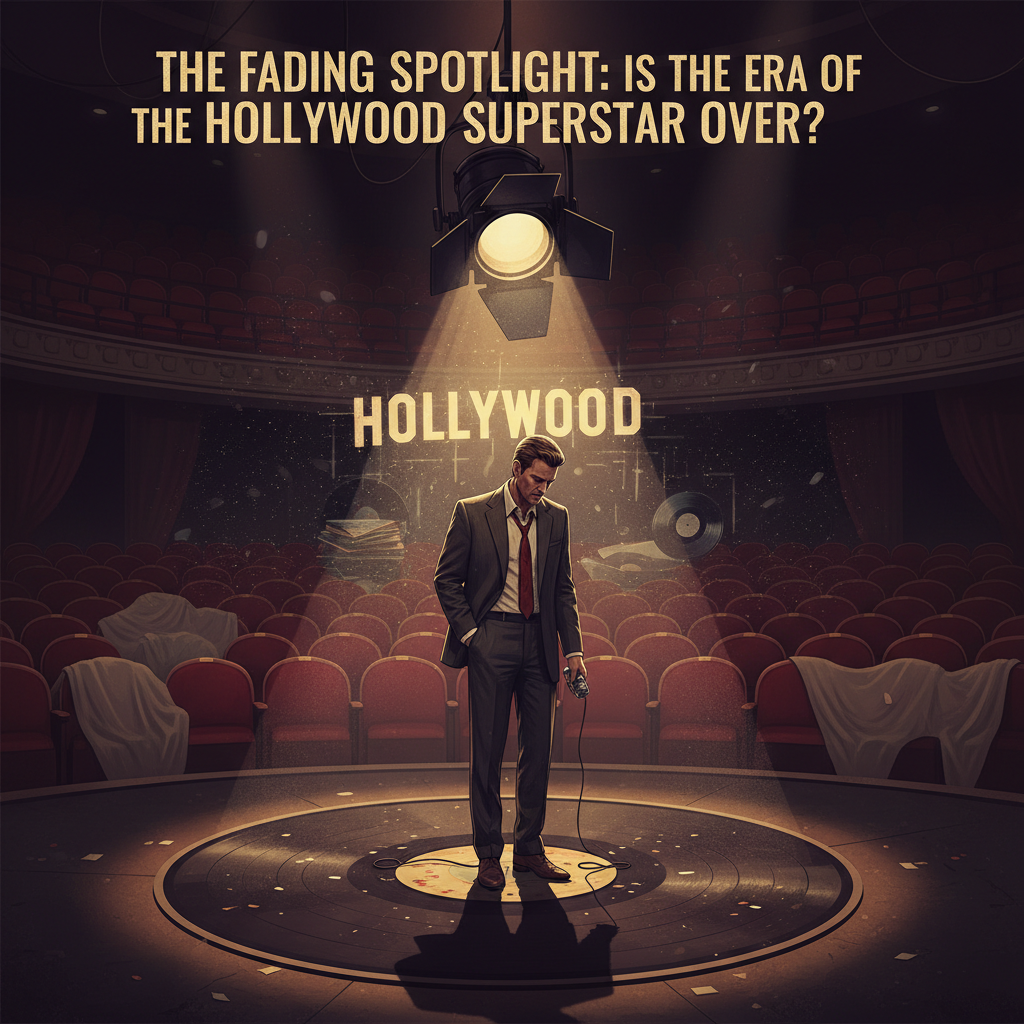
For decades, the architecture of popular music was built on a single, towering pillar: the Hollywood superstar. From Elvis to Madonna, from Britney Spears to Justin Bieber, the industry relied on a monolithic model where a handful of global icons dominated airwaves, drove streaming numbers, and dictated cultural conversation. Radio programmers were advised to lean heavily on these names to secure ratings, while record labels invested billions in manufacturing and sustaining this specific type of stardom. But as we navigate the mid-2020s, a quiet but profound shift is occurring. The halo effect of the traditional movie-star musician is dimming, replaced by a more fragmented, accessible, and algorithmically driven landscape. We must ask whether the era of the untouchable Hollywood superstar is truly over, or if it has merely transformed into something more diffuse.
The Architecture of a Star
To understand the current decline, we must first appreciate the machinery that built the original superstar. In the 20th century, stardom was a product of scarcity and gatekeeping. You could not reach an audience without passing through the filters of major label A&R, radio program directors, and MTV executives. These intermediaries curated taste, ensuring that only a select few artists received the massive promotional budgets required to achieve ubiquity.
This model created celebrities who felt distant and aspirational. The "Hollywood superstar" was not just a singer; they were a brand, a visual spectacle, and a news cycle event. Their music was often secondary to their persona. For radio stations, these artists were safe bets. They guaranteed listener retention because their names alone possessed significant gravitational pull. The relationship was vertical: the star looked down from the pedestal, and the audience looked up, consuming content passively.
The Algorithmic Disruption
What is happening now is not a sudden crash, but a steady erosion of that pedestal. The primary driver is the democratization of distribution via streaming platforms and social media. No longer do artists need a label deal to reach millions; they need a viral moment on TikTok or a playlist placement on Spotify’s "Today’s Top Hits." This shift has fundamentally altered how fame is constructed.
We are seeing the rise of the "micro-celebrity" and the niche hit. An artist can achieve massive success within a specific subgenre or demographic without ever crossing over to mainstream generalist radio. Consider the explosion of hyperpop, Latin trap, or K-pop sub-fandoms. These communities are deeply engaged but operate outside the traditional Hollywood framework. The music is consumed differently—often through playlists rather than album purchases—and the connection between fan and creator is direct, mediated by screens rather than magazines or TV appearances.
As one senior programming director at a top-40 station in the Midwest noted, "We used to book stars for their name recognition. Now, we book songs that are already trending. If a track hasn’t hit 50 million streams organically, it doesn’t matter how many Grammy nominations the artist has. The data dictates the booking, not the legacy."
Why This Shift Matters for Stations and Creators
This transition presents both a crisis and an opportunity for terrestrial radio and the broader music industry. For stations, the reliance on established superstars is no longer a guarantee of loyalty. Listeners, particularly Gen Z and younger Millennials, are more likely to follow a song or a meme than a person. If a station plays a "classic" superstar track that isn't currently resonating in the digital sphere, it risks sounding out of touch.
However, this fragmentation allows for greater diversity in the spotlight. Creators who might have been rejected by traditional gatekeepers for lacking a certain "look" or background are finding audiences. The barrier to entry has lowered, but the barrier to sustained relevance has changed. It is no longer about maintaining a pristine public image; it is about maintaining engagement.
Key shifts in the landscape include:
* The Decline of the Album Cycle: Singles and playlist inserts dominate release strategies, reducing the cultural weight of full-length artistic statements that once defined eras.
* Direct-to-Fan Monetization: Artists increasingly rely on Patreon, Discord, and direct merchandising, reducing their dependence on radio play and major label advances.
* Visual-First Discovery: TikTok and Instagram Reels have become the new A&R departments, where visual appeal and dance challenges drive audio consumption more than vocal prowess or lyrical depth.
* Fragmented Audience Loyalty: Fans follow content creators and influencers who also make music, blurring the lines between celebrity and influencer.
The New Definition of Stardom
Does this mean the Hollywood superstar is dead? Not entirely. Artists like Taylor Swift, Beyoncé, and Bad Bunny still command global attention that rivals any action movie star. However, their status is increasingly earned through sustained digital engagement and business acumen rather than manufactured mystique. They are superstars, but they are also entrepreneurs and community managers.
The old model required silence and distance; the new model requires noise and proximity. The mystery that once fueled fascination has been replaced by transparency. Audiences now expect behind-the-scenes access, vulnerability, and interaction. The "untouchable" quality that made previous generations of stars so compelling is viewed with skepticism today.
Takeaway
The era of the Hollywood superstar, as historically understood, is indeed over. We have moved from an age of idolatry to an age of identification. For radio stations, the implication is clear: you cannot simply play the greatest hits of a fading icon and expect to capture the market. You must curate for the now, leveraging data to find the next wave of talent before they break through. For creators, the lesson is equally stark. You can no longer wait for permission to be famous. You must build your audience directly, engaging with them in real-time. The spotlight is no longer a single beam from above; it is a constellation of countless small lights, each burning bright within its own orbit. The game has changed, and those who adapt to the new physics of attention will thrive, while those clinging to the old model will find their signal fading into static.


