The Audio Pivot: Why Gen Z Creators Are Trading YouTube Burnout for Internet Radio
For more than a decade, the playbook for aspiring digital creators was single-minded: launch a YouTube channel, optimize thumbnails for maximum click-through rate, invest in high-end camera bodies, and feed an unforgiving recommendation algorithm that demands
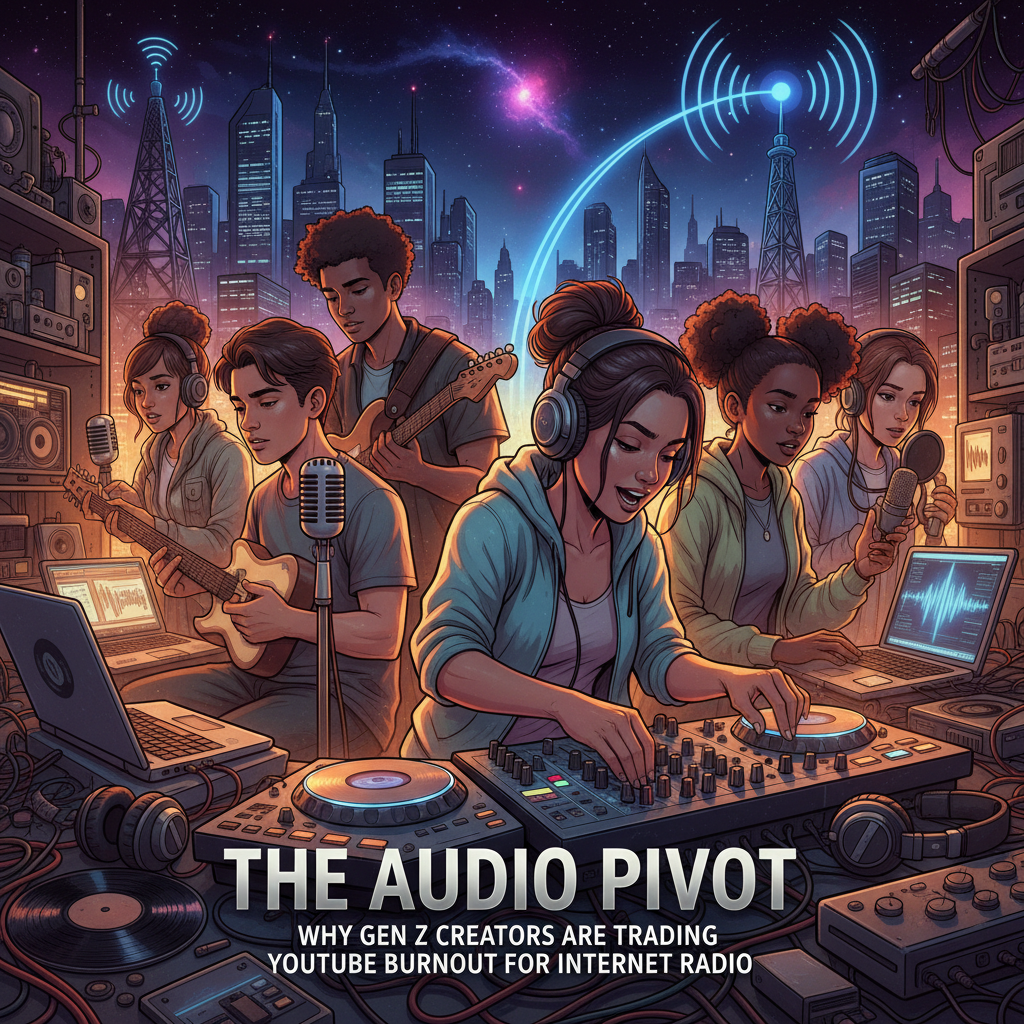
For more than a decade, the playbook for aspiring digital creators was single-minded: launch a YouTube channel, optimize thumbnails for maximum click-through rate, invest in high-end camera bodies, and feed an unforgiving recommendation algorithm that demands weekly visual output. For Gen Z, however—a cohort famously defined as digital natives—that playbook is showing clear signs of structural fatigue.
Faced with escalating gear expenses, severe algorithmic volatility, and the constant psychological toll of being perpetually "camera-ready," a quiet migration is underway. Young broadcasters, selectors, and community builders are turning toward a classic yet modernized medium: independent internet radio. By prioritizing audio-first streams over video production, Gen Z is redefining what it means to build a sustainable, cost-effective, and authentic media footprint in the modern creator economy.
Background and Context: The Video Treadmill Hits a Wall
To understand this shift, one must examine the operational reality of running a competitive YouTube channel in 2024. What began as a platform for casual vlogging has evolved into an arms race of studio production values. Creators routinely face startup costs running into thousands of dollars for cinema-grade cameras, dynamic microphones, multi-point studio lighting, and dedicated editing workstations capable of rendering 4K footage.
Beyond capital expenditure lies an even steeper tax: time. A 10-minute polished video can easily consume 15 to 20 hours of editing, colour grading, audio mixing, and search engine optimization. If an upload fails to capture early momentum within the first two hours, the algorithm often buries the project, yielding pennies in AdSense revenue relative to the labor invested.
"The economics of beginner video production are fundamentally broken for individual creators," explains Marcus Vance, a senior media infrastructure analyst. "You are competing against venture-backed production houses using consumer-level revenue tools. Internet radio strips away the visual overhead and recalibrates the relationship between production time and published broadcast time."
This realization has led creators to seek alternative mediums where editorial expression takes precedence over performative visuals.
What’s Happening Now: The Rise of Autonomous Audio Streams
Rather than feeding the video feed, Gen Z creators are launching independent web radio stations using cloud-hosted automation, light-overhead streaming servers, and community-centric distribution models. Leveraging platforms like AzuraCast, Icecast, and modern web hosting solutions, young programmers are building 24/7 stations that blend live broadcasts, curated DJ sets, ambient soundscapes, and niche talk shows.
This movement is driven by a desire for intimacy and low-friction consistency. A stream can run indefinitely from a cloud server costing less than a monthly coffee subscription, allowing creators to broadcast whenever inspiration strikes without worrying about lighting grids or video rendering errors.
The operational advantages of this transition are distinct and measurable:
* Drastic Overhead Reduction: Launching a functional internet radio station requires an investment as low as a decent USB or XLR microphone and a $10 to $30 monthly server allocation, compared to the $1,500+ minimum threshold for entry-level video creation setups.
* Streamlined Workflow: Audio editing and live broadcasting require a fraction of the bandwidth, rendering, and processing power of video, cutting post-production timelines by up to 70 percent.
* Continuous Presence: Cloud-based AutoDJ software allows stations to broadcast linear, 24/7 programming even when the creator is offline, building an ongoing ambient presence that video platforms cannot easily replicate.
* Direct Audience Ownership: Internet radio stations rely on open web standards (RSTP, HTTP streams, and custom web players), freeing operators from platform-level algorithm changes and sudden demonetization policies.
Frictionless Curation: A Cost and Workflow Breakdown
The day-to-day workflow for a radio station operator offers a stark contrast to the relentless sprint of video publishing. Creators can spend three hours curating an entire week's worth of automated musical programming and spoken-word drops, scheduling them seamlessly through modern web dashboards.
"When I managed a YouTube channel, I spent 80 percent of my time editing out breath sounds, framing shots, and stressing over clickbait titles," says Maya Lin, a 22-year-old station operator running Subastral Radio, a niche station dedicated to emerging electronic music and local community talk. "With radio, 90 percent of my energy goes directly into music discovery, interviewing artists, and hanging out in our station’s active chat room. It’s fundamentally about the sound and the community again, not the camera angle."
Lin’s experience underscores a broader trend: Gen Z creators are prioritizing community depth over passive view counts. By embedding custom web players into dedicated web pages or linking streams directly into community platforms like Discord, operators construct tight-knit, interactive hubs where listeners gather simultaneously, restoring the collective experience of live listening that broadcast radio pioneered decades ago.
Why It Matters for Stations and Creators
For established station managers and emerging creators alike, this migration signals a crucial maturation of the web audio ecosystem. As the creator economy shifts away from top-down algorithmic discovery and toward micro-communities, the linear audio stream has emerged as an ideal medium for loyal engagement.
For legacy stations, the entry of Gen Z programmers brings fresh curation, hyper-focused sub-genre exploration, and digital-native social integration. These younger station heads do not view internet radio as a legacy medium holding on for survival, but rather as an uncompromised, agile tool for independent publishing.
Furthermore, monetization strategies in independent radio have matured. Rather than relying solely on programmatic ad buys with low CPMs, young station managers are successfully monetizing through direct listener support, paid community memberships, localized brand sponsorships, and physical merchandise drops. This direct-to-fan economy ensures that a station with 500 deeply dedicated live listeners can often generate more sustainable recurring income than a channel with 10,000 passive, algorithmic video viewers.
The Rebirth of Unfiltered Broadcasting
The shift from video channels to independent internet radio stations represents more than just a search for cheap tools; it is a fundamental realignment of creative priorities. Gen Z creators are actively opting out of the hyper-polished, visual-first content rat race in favor of mediums that reward depth, editorial curation, and authentic human connection.
By reclaiming the airwaves through lightweight, accessible web radio tools, this generation is proving that effective digital broadcasting doesn't require a production crew or a high-end camera—it simply requires a distinct voice, a well-curated signal, and the freedom to stay on the air.


